
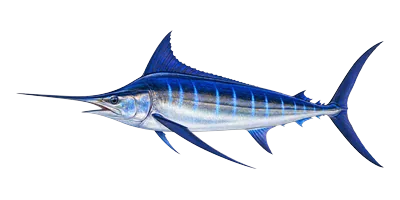
Florida state record
- 1,046.00 lb Panama City · July 14, 2001 · Conrad E. Hawkins
From FWC Florida Saltwater Fishing Records (All-Tackle), checked Sep 2026. Records are certified by FWC and can be broken at any time.
About the fish
FWC calls the blue marlin the largest Atlantic marlin species.
From FWC's species profile, checked Sep 2026.
Which rules apply to your trip
- FWC says the federal HMS Angling permit is not required to fish for billfish in Florida state waters. NOAA says vessels need a valid HMS Angling or HMS Charter/Headboat permit to fish for Atlantic billfish.
- On a boat that holds an HMS permit, federal rules apply even in state waters, unless the state rule is stricter.
- U.S. total landings of blue marlin, white marlin and roundscale spearfish combined are limited to 250 a year.
- Land one and it must be reported to NOAA within 24 hours, at 800-894-5528 or hmspermits.noaa.gov.
Blue marlin, Florida state waters: when you can keep one
Florida state waters, Gulf and Atlantic.
- All anglersOpen year roundFWC.
Blue marlin, federal waters: when you can keep one
Federal waters, under NOAA Fisheries' Atlantic billfish rules.
- Anglers on a permitted vesselOpen, per NOAA's fishery status page when checked.NOAA Fisheries.
Questions about blue marlin
How big does a blue marlin have to be to keep?
99 inches, measured from the tip of the lower jaw to the fork of the tail.
Do we need a permit?
FWC says the HMS Angling permit is not required in Florida state waters. NOAA requires a valid HMS Angling or HMS Charter/Headboat permit to fish for Atlantic billfish, and a boat that holds an HMS permit must follow federal rules in state waters unless the state rule is stricter.
Does a landed marlin have to be reported?
Yes, to NOAA within 24 hours of returning from the trip.
Seasons, sizes and bag limits on this page were copied from NOAA Fisheries, recreational Atlantic billfish and NOAA Fisheries, HMS reporting and FWC, blue marlin profile and FWC, billfish, tuna and swordfish regulations in Sep 2026. Rules change, sometimes mid-season. Check the current rule with your captain or FWC before you keep a fish.